
Project context and objectives
The Xitlhelani community in Limpopo, South Africa, has limited access to computer equipment and digital learning resources. This restricts opportunities for students, teachers, and other members of the community to develop practical digital skills.
The project, carried out jointly by AUCOOP and Amandla Community Projects, aimed to strengthen the technological infrastructure already available in the community and to support its long-term use through training, documentation and knowledge transfer.
Activities carried out
ICT infrastructure and maintenance
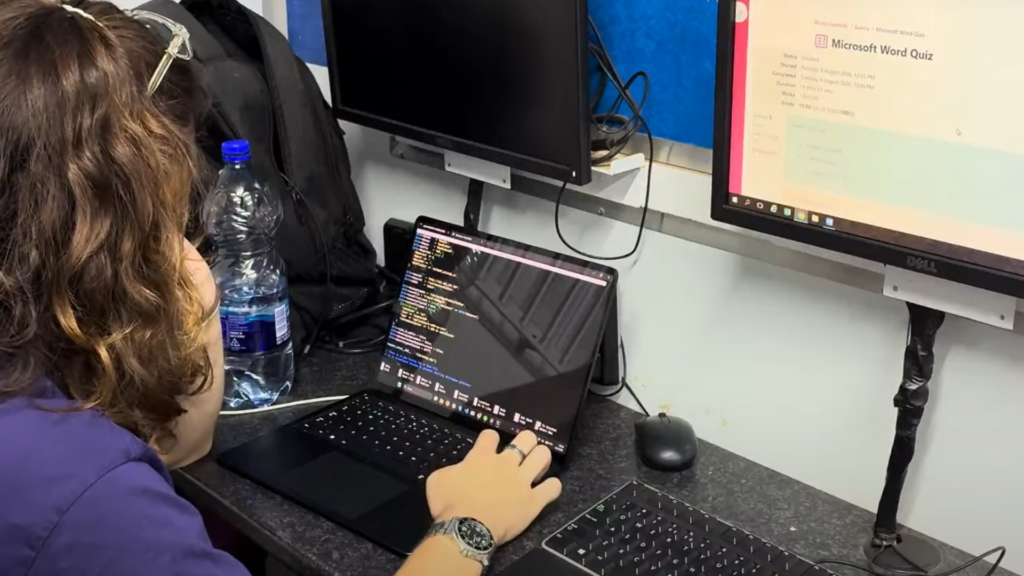
The Solar Learning Lab’s computer infrastructure and Wi-Fi network were reviewed and improved, and additional computers brought from Barcelona were installed and configured.
Part of the work was carried out with members of the local community so they could increasingly manage basic hardware and software maintenance tasks locally. The objective was not only to improve the existing infrastructure, but also to reduce its dependence on external technical support.
Training and digital skills
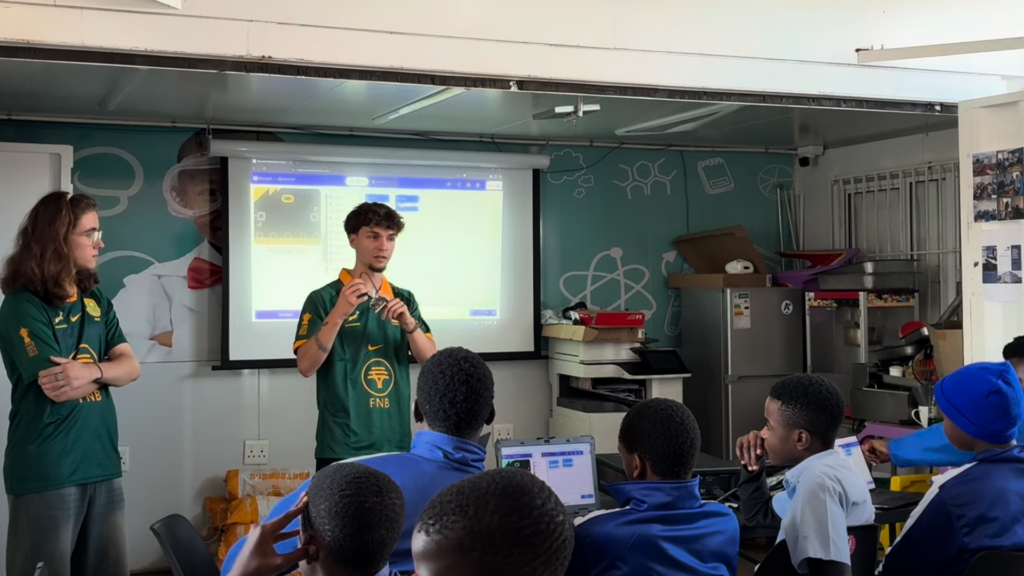
Training sessions were organised for different groups and levels of experience.
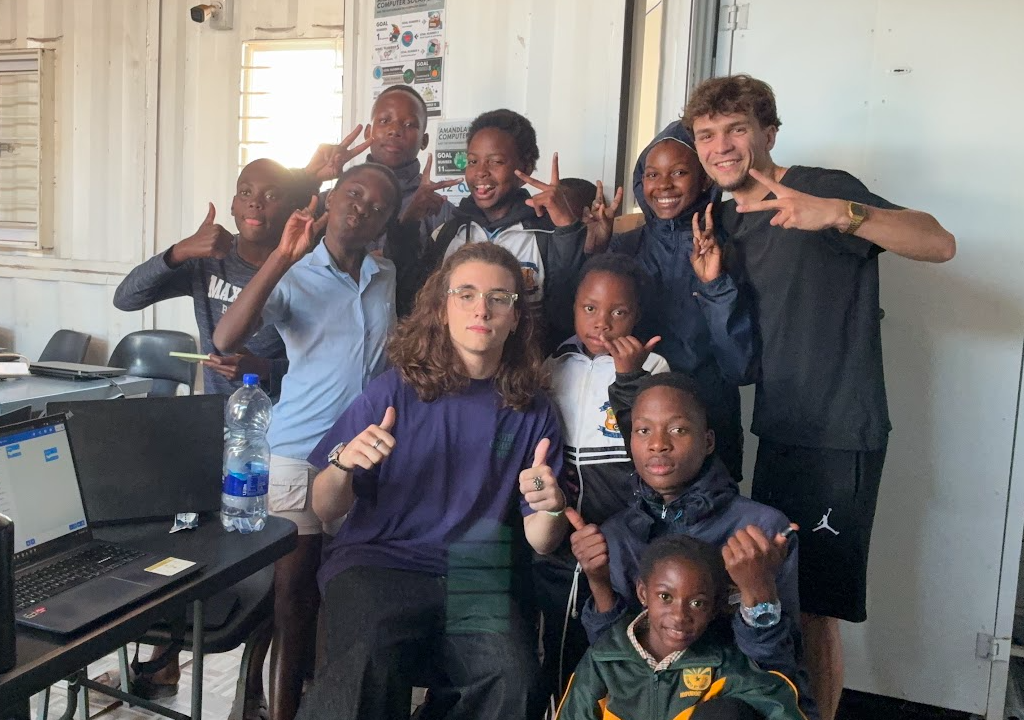
Practical activities introduced programming and basic computer skills to students aged approximately 8 to 18. Teachers were also introduced to digital tools and educational resources they can use in the classroom and in the Solar Learning Lab.
The training was adapted to the available equipment and to the participants’ previous experience, with an emphasis on practical use rather than theoretical knowledge.
Documentation and long-term autonomy
Technical and educational documentation was prepared so Amandla staff and local teachers can continue using and maintaining the systems after the on-site work ends.
A remote communication channel also remains open between the project team and Amandla Community Projects to provide technical support when necessary.
Results and continuity
Following the project, Amandla has continued organising programming activities using the infrastructure and materials prepared during the collaboration.
The next steps identified together with the local organisation include integrating digital and programming activities more closely into school education, expanding the programming curriculum, and continuing the maintenance and gradual improvement of the laboratory using the technical knowledge developed locally.
The project was therefore conceived not as a one-off technological intervention, but as a contribution to the long-term capacity of Amandla and the Xitlhelani community to manage and develop their own digital learning environment.
Funding and resources
- UPC contribution through the Centre for Development Cooperation (CCD): €4,005, allocated to travel and living expenses for the student volunteers participating in the project.
- Contribution from Internet Society Foundation, Beyond the Net program, and the Catalan Chapter of the Internet Society ISOC.CAT.
- Equipment: computer equipment and robots (micro:bit) were transported from Barcelona and incorporated into the Solar Learning Lab.
- Technical contribution: the project involved volunteer work in computer infrastructure, networking, equipment configuration, maintenance, programming education, and digital training.
- Local contribution: Amandla Community Projects provided the facilities, local coordination, and ongoing management necessary for the continuity of the activities.